


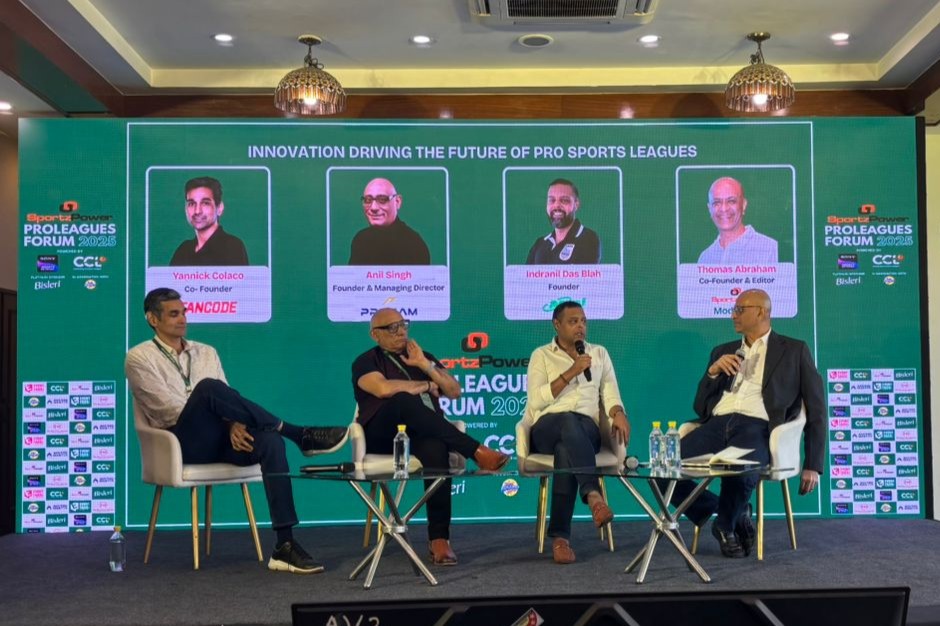
At the SportzPower ProLeagues Forum 2025, held on December 10, 2025, at the Boundary Hall, MCA Recreation Centre, BKC, Mumbai, one of the most forward-looking conversations of the day explored how innovation is reshaping the business and experience of professional sports in India. The session, titled “Innovation Driving the Future of Pro Sports Leagues,” brought together leaders who are redefining how fans engage, leagues operate, and athletes build their personal brands.
The panel featured Yannick Colaco, Co-founder, FanCode, Anil Singh, Founder & Managing Director, Procam International, and Indranil Das Blah, Founder, AMP Sports & Entertainment, in conversation with Thomas Abraham, Co-founder & Editor, SportzPower.
The discussion opened with Yannick Colaco emphasising the importance of creators and digital-first thinking in modern sports, “Any form of sports event today needs to focus on working with creators. You use technology to solve problems and add layers that keep a consumer engaged.”
He highlighted that true innovation lies in enhancing the viewer experience while building communities around sports IPs.
Bringing a grounded perspective, Anil Singh reminded that technology cannot overshadow the fundamentals. “You have to always stick to the core of sports and games—be real, there’s no rocket science. Sports is about passion and grit, how you create, connect, and live. FanCode gives you a backup where you don’t need to pay any money.” He reiterated that innovation is only meaningful when it strengthens the essence of the sport.
Adding to this, Indranil Das Blah spoke about balancing modern tools with authenticity, “Technology and innovation are great, but you’ve got to figure out what’s right for the sport. Entertainment comes into the picture, but don’t chase buzzwords—be authentic.”
The panel examined formats like basketball, where entertainment has become an integral part of the experience. Yannick noted, “You can do a lot in basketball—entertainment, activities, fan zones. There’s no secret sauce; you just have to get the sport right.”
On the challenges of building leagues, Anil pointed out the need for realistic, long-term thinking, “Challenges are always there. We need to understand what kind of sport needs attention. Sport has to grow organically; it takes time depending on its pattern. Is the game a spectator sport? Does it allow you to create relevance? That depends on how you plan and execute.”
Using pickleball as an example, Indranil added, “Pickleball is a participatory sport, and some brands just wanted a tick on the box. With basketball, you have music, food, entertainment—that’s where it becomes a holistic experience.”
On fan engagement in the digital landscape, Yannick highlighted the accessibility and flexibility of digital ecosystems, “In digital, everything is easier—you can convince your audience quickly. These micro qualities help you partner with brands, companies, and communities working in the same arena.”
Anil again stressed the value of authenticity in storytelling, “You can’t create stories; they are lived.”
Closing the discussion, Yannick pointed to the rising power of athletes and their role in shaping the future of leagues. “Athletes need to push themselves—they have their own social media presence. The sport can be constantly pushed by the story of the athlete.”
The session ultimately underscored that India’s sports future will be built on authentic experiences, strong athlete narratives, and digital innovation that enhances—not replaces—the core of sport. Innovation, the panel agreed, must serve the game, the fan, and the long-term sustainability of leagues.

