



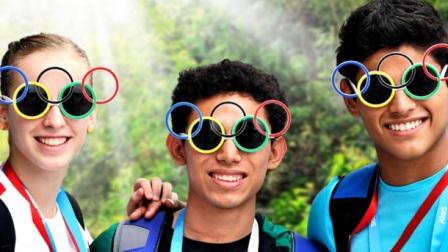
Ahead of the 144th IOC Session in Greece next month, the IOC has released the highlights of the Olympic Agenda reforms.
The wide-ranging reforms of Olympic Agenda (Olympic Agenda 2020 and Olympic Agenda 2020+5) have changed the International Olympic Committee (IOC), the Olympic Games and the Olympic Movement profoundly. Launched under the motto “Change or be changed” and based on the widest-ever consultation process, the reform programme was unanimously approved by the 127th IOC Session in Monaco in December 2014.
The reforms followed a year of discussion and consultation with all stakeholders of the Olympic Movement, together with external experts and the general public. More than 40,000 submissions were received from the public during the process, generating some 1,200 ideas.
Fourteen Working Groups synthesised the discussions and debates throughout the whbole Olympic Movement and wider society before they were finalised by the executive oard ahead of the 127th Session.
Work on implementation began immediately after the reforms were adopted. Among other things, work began on the Olympic Channel. The new Invitation Phase was launched for the 2024 Olympic Games, allowing cities to present an Olympic project that best matched their long-term sports, economic, social and environmental plans. Some of the reforms were also included in the 2022 process, in close cooperation with the Games host.
On Tuesday, the IOC released the highlights of the Olympic Agenda reforms summarised in 10 topics.
The Olympic Games – Games of a New Era
Olympic Agenda has revolutionised how the Olympic Games are awarded, organised and presented to a global audience that is bigger than ever.
Athletes front and centre
The IOC has empowered athletes within the decision-making processes of the IOC and put them at the heart of the Olympic Movement.
Solidarity
Solidarity has been greatly reinforced by the Olympic Agenda.
Refugee Olympic team and Olympic Refuge Foundation
In 2015, the IOC created the first-ever Refugee Olympic Team (EOR) to give athletes who had been forced to leave their homes the chance to compete on the world’s largest sporting stage alongside their peers from the 206 National Olympic Committees. This was followed in 2017 by the launch of the Olympic Refuge Foundation (ORF), to ensure that young people affected by displacement thrive through safe sport on a daily basis.
Gender equality
The IOC has made huge strides in gender equality both on and off the field of play – from the training ground to the boardroom and beyond.
Sustainable development
The IOC has embraced the role of sport as an important enabler for the UN Sustainable Development Goals.
Relevance
The Olympic Games and the IOC are more relevant than ever in today’s divided world. They unite the entire world in peaceful competition.
Digitalisation
The IOC has been a pioneer of digitalisation in sport.
Credibility and good governance
Through the Olympic Agenda, the IOC has completely overhauled its governance processes and has strengthened the protection of clean athletes.
Economic and Financial Resilience
The IOC is a non-governmental, not-for-profit association. It is entirely privately funded and distributes 90 per cent of its revenue to sport worldwide.

