



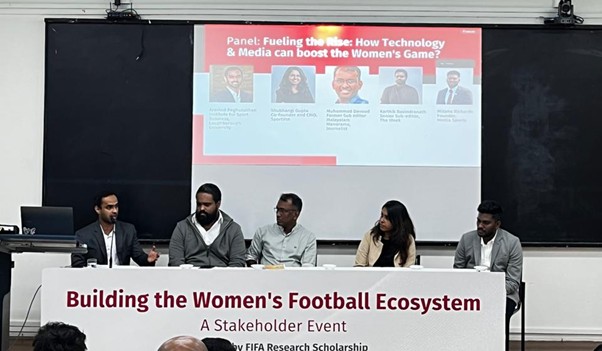
K J SOMAIYA INSTITUTE of Management (KJSIM), in collaboration with Loughborough University, UK, convened key stakeholders for a dialogue exploring the structural, financial and social challenges shaping the growth of women’s football in India.
The discussion brought together leaders from governance, academia, media, technology and international football organisations, underscoring the importance of global knowledge-sharing within India’s evolving sports ecosystem.
KJSIM associate dean – academic programs Dr Manjari Srivastava, highlighted the real-world relevance of an MBA in Sports Management. She urged educators, researchers and industry leaders to collaborate more closely, emphasising that meaningful progress depends on strong, practice-led partnerships. “Students are the future of Indian sport, particularly football, and it is critical that education, research, and industry work together to support long-term ecosystem growth,” Dr Srivastava said.
The dialogue drew on insights from FIFA-supported research conducted by Dr Vidya Panicker, associate professor – international business, and Dr Aravind Reghunathan, assistant professor – institute for sport business, both from Loughborough University. The study was based on interviews with 33 stakeholders across the women’s football ecosystem.
The research pointed to fragile funding models, limited institutional continuity and persistent social barriers, highlighting that sustainable progress in women’s football requires long-term commitment and strategic planning. England’s Women’s Super League was cited as a benchmark, demonstrating how structured club systems, stable sponsorship and strong governance can drive sustained growth.
Offering the federation’s perspective, All India Football Federation chief of strategy and operations Nildeep Mondal addressed challenges around player development and grassroots expansion. He noted that access to the sport is often influenced by family and community support, making local ecosystems crucial to a young player’s development pathway.
The sessions also explored CSR funding frameworks, performance analysis, and the role of technology and data in improving decision-making, even for clubs operating with limited resources. Discussions highlighted how effective media storytelling and digital platforms can increase visibility, attract sponsors and strengthen fan engagement.
For students, the event provided direct exposure to applied research, federation leadership, international club models, analytics practices and media strategy, opening avenues for future research collaborations, live projects, internships and mentorship opportunities.

