



The body is the currency of every sportsperson, its state the biggest difference between success and failure. With sport becoming demanding by the day, the field of sports science and medicine is becoming more professional and as a result, increasingly focused upon by sports teams and organizations.
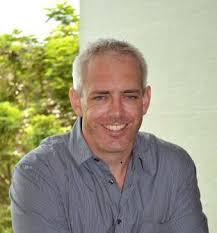
As the West has grown in leading the way in research of sports sciences and medicine, Dr TIM GABBETT has been one of its leading exponents since the last two decades. With two PhDs specialising in human physiology and football, the Australian has worked with elite international athletes over several Commonwealth Games (2002 and 2006) and Olympic Games (2000, 2004, and 2008) cycles.
He has also published over 200 peer-reviewed articles and has presented at over 200 national and international conferences.
Dr Gabbett was recently in Mumbai as part of his global ‘Workload Management and Athlete Management Workshop’ series in partnership with ‘The Heal Institute’, one of the city’s top physiotherapy clinics.
SportzPower took the opportunity to interact with Dr Gabbett to dwelve deeper into the subject from the perspective of Western and Indian markets alike.
What is the ‘Workload Management and Athlete Management Workshop’ series all about? How would this one in India and others conducted in Asia differ from the rest of the world?
The series aims at reducing the workload on athletes seeing constant changes in demands that sport presents across the world. This can be done by introducing innovative training programs for athletes maintaining their peak in performance while minimising their risk of getting injured.
To achieve the goal, we are focusing on making aware or rather following the ‘Train the Trainers’ approach. In India, cricket is the only major difference of our focus as compared to other countries. We have undertaken research on the load taken by fast bowlers, since they are the ones most vulnerable to injuries.
However, our work done back in Australia will directly be applied to India as well. It will be the same case for other sports as well since an athlete is an athlete, no matter which team they play for. It is essential to look at similarities more than differences since understanding athletes is paramount for success in this field.
Across sports, leagues and countries you have worked in, which ones according to you focus the most on sports science? On those which are work in progress, where are the areas they need to work upon?
Fortunately, sports teams and organisations around the world are starting to understand the importance of the quantity of smart personnel they already have working for them such as coaches, medical staff, high performance managers and even athletes. They are as essential as administrators to make this field their biggest strength.
The right type of communication amongst all the stakeholders is essential. Otherwise, ego battles or turf wars don’t help sport grow in any way. The skill of man management is starting to trump everything else because all must be on the same page to take player workload and well-being as a department to be specially treated altogether.
Leaders and managers must look to take ‘to each to their own’ or a customised approach towards each athlete in creating training programs for them. Seeing the effort put in by them is what an elite performer wants ultimately to respond equally well.
How has sports science evolved in the last 10-20 years in professional sport? In what ways are universities and other institutions you know of, assisting in making it a full time professional career for otherwise qualified doctors?
The evolution has been marked by the fact that 10-20 years ago, there weren’t many pathways for the youth across the world to graduate from university to professional sport in the field of sports science and research. This process would have taken a decade for even the most skilled or qualified medical practitioners.
However, presently its value is like any other career option. With more specialised jobs being created in the field and partnerships between academic institutions and organisations, youngsters can make a potential living out of it if they are prepared to be patient, evolve and work hard.
In what ways must India improve in its quest for sports research and medicine facilities of international standard? Since athletes usually have to manage this aspect on their own, what are the ways in which injury management can be made a more personalised and pocket-friendly experience?
India must look to take bits and pieces from the systems and approaches followed in established countries like Australia, USA and the UK. There is no one correct model to be emulated in this regard.
Identifying the major problems and challenges is the first major step to create tailor-made solutions pertaining to the Indian market. Staying true to your culture is essential because that is what western countries did over the years and have found success in it automatically.
Our workshop series is a way for Indian trainers to gain more knowledge about the field and changes happening in them, whether athletes are playing at the elite level or not. For one trainer, there are many athletes in India due to the country’s population.
This is also a reason why the series is in collaboration with ‘The Heal Institute’ as it works with leading football teams and physiotherapy chains for example. There is no dearth of resources now which are simple and accessible as well. Fortunately, most injuries in sport aren’t severe so trainers and athletes can work out a plan which is financially viable for both the parties.
Please comment on the recent govt announcement of Rs 3.44 billion on investing in this field and setting up a National Centre of Sports Sciences and Research (NCSSR). Would private-public partnerships be the way forward when it comes to investments?
The Indian government has shown great leadership and a forward thinking approach with this scale of investment because sport is culturally important for the country. I believe that the message sent out is that it is concerned about the well-being of not just Indian athletes, but people in general since injuries are a part and parcel of the game even as sport provides tremendous health benefits.
As I have seen in the West, India could have many of its industries step up to invest more in sports sciences such as the military, which has a lot to do with fitness and well-being. Sport must look to achieve these objectives, which any government won’t be able to achieve on its own.
Are there any further plans to extend this workshop series in India?
India has been more than a dream so far, so I can never-say-never to opportunities in Tier I and II cities as well in the future.
My passion for translating the language of scientific knowledge and research into a user-friendly way for people who will benefit from it the most, is what drives me. The enthusiasm in this field has increased everywhere I’ve been so far, which is an encouraging sign.
What resources must sports administrators give or allocate for sports sciences to get its due around the world?
Sports administrators must look to take some time out of their busy schedule to understand the basics of sports science, not necessarily the specifics of it. This will give them a greater appreciation and knowledge of the resourcing actually required to allocate to it.
Taking to technological advancements in the field is great, but as I said before, it takes great people and camaraderie between them to make the best use of them.
Focus must also be given to the external stresses that most modern-day athletes go through which could in the form of social, business or media obligations. If it is well understood that it varies from player to player, that is a sign of a fine system of athlete management as their longevity increases.

