


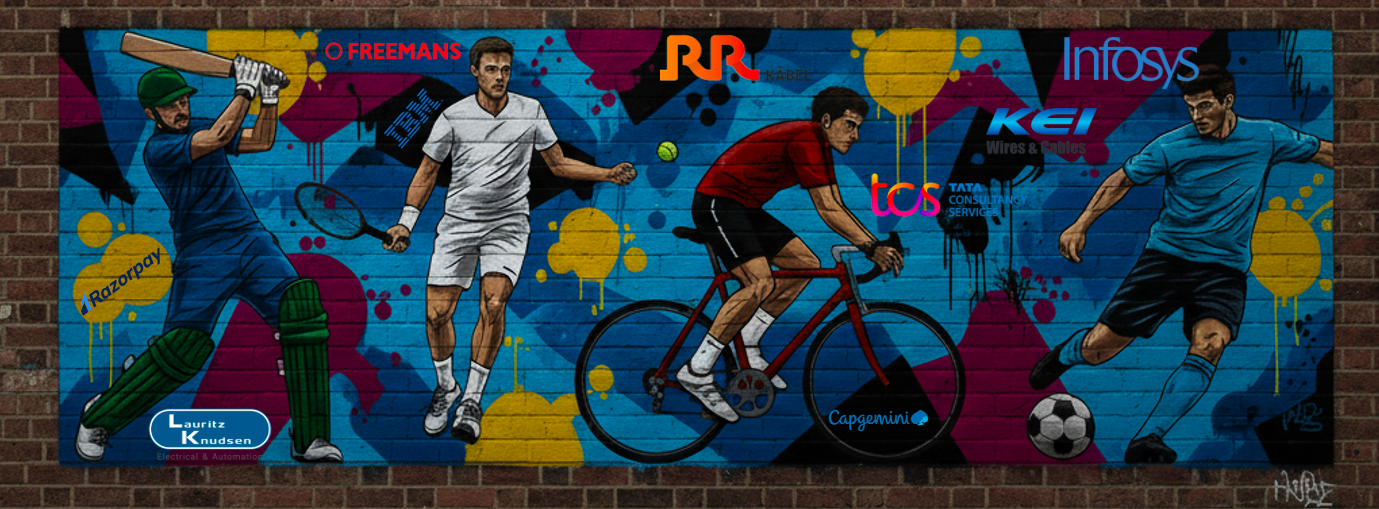
OVER THE PAST few years, there has been a clear and measurable shift in the sports marketing landscape – B2B brands are emerging as significant investors in sports sponsorships. Research agencies tracking this trend have consistently reported that more industrial, technology, and financial solution brands are stepping into spaces historically dominated by B2C players. These include team sponsorships, league title partnerships, and endurance-based properties such as marathons.
Beyond ROI: A Cognitive Rationale
At first glance, this expansion might appear counterintuitive. B2B brands operate in relationship-driven environments where sales cycles are long, decisions are rational, and consumer-facing visibility seemingly offers limited return. Yet, the growing participation of brands such as Freemans, Lauritz Knudsen, KEI Wires, RR Kabel, Razorpay across the IPL ecosystem and RR Kabel’s recent move to become the title sponsor of the Prime Volleyball
League underscores a fundamental evolution in sponsorship thinking.
While part of this investment indeed strengthens dealer and trade network loyalty, the deeper motivator lies in the cognitive mechanism that governs brand perception. Sponsorships in sport activate memory, emotion, and associative learning, embedding the brand in the audience’s subconscious as a symbol of performance, endurance, and credibility.
How Cognitive Mechanism Functions ?
The cognitive mechanism in sponsorship operates on multiple layers:
1. Associative Learning
– Continuous exposure to a brand in high-impact sporting environments links the brand with the core values of sport – precision, resilience, teamwork, and performance under pressure.
These attributes are subconsciously transferred to the brand, shaping long-term perception.
2. Social Validation
– When a brand is seen across prestigious leagues or global sporting stages, it triggers a sense of legitimacy and pride among dealers, partners, and internal stakeholders. It confirms the brand’s scale and reliability, key psychological reinforcements in B2B networks.
3. Memory Encoding
– Repeated brand impressions in emotionally charged sporting contexts improve recall efficiency. When decision-makers later face a purchase or partnership intent or choice, the
cognitively encoded memory of the brand becomes a silent but influential cue.
Cohort-Driven and Sport-Driven Fundamentals
At a deeper level, B2B sponsorships function through cohort-driven and sport-driven fundamentals. Unlike mass-market advertising, the impact of sponsorship is filtered through specific influence cohorts – dealers, distributors, procurement heads, engineers, or business leaders – who act as amplifiers of perception.
Each sport creates a different cognitive ecosystem:
• Cricket, Football, Volleyball, Basketball offer community, celebration, and national pride – powerful tools to energise dealer and distributor morale.
• Marathons and endurance sports evoke resilience, commitment, and global excellence – qualities B2B technology or infrastructure brands wish to project.
• Motorsport or Global Tennis Sponsorships communicate precision, innovation, and speed – aligning perfectly with IT, engineering, and manufacturing narratives.
These cohort-based mechanisms ensure that sponsorships extend far beyond the visibility of a logo. They build a shared emotional context that enhances brand preference and stakeholder pride.
Case in Point: The Global IT Brands & Affinity Towards Sports
Global tech brands best illustrate this transformation in B2B sports sponsorships. Tata Consultancy Services (TCS) invests over INR 3,00cr annually, title-sponsoring marathons across New York, London, Sydney, Amsterdam, and in India, Mumbai and Bengaluru; while serving as the technology partner for Chicago, Toronto, Paris, Lidingöloppet, and Canberra.
Similarly, Infosys serves as the Digital Innovation Partner of Roland-Garros, while IBM continues its long-standing association with Wimbledon. HCLTech, with its expanding portfolio of marathons, cyclothons, and its recent sponsorship of Cricket Australia, and Capgemini, through its partnerships with the Tour de France and major Rugby events, further exemplify how B2B brands are leveraging sport to drive deeper cognitive and emotional engagement.
The Cognitive Dividend: Redefining Returns in B2B Sponsorships
Traditional ROI metrics of impressions, media value, or leads fall short of capturing the true value of B2B sports sponsorships. The real measure lies in their Cognitive Impact how deeply a brand embeds trust, recall, and authority among its key influence groups.
Sports sponsorships by B2B brands are no longer symbolic gestures or dealer appeasement tactics. They have evolved into strategic tools of cognitive influence, where the focus shifts from visibility to trust-building, psychological affinity, and long-term leadership.
By connecting logic with emotion and business with belief, these sponsorships go beyond transactions to create sustained mental presence where every partner, customer, and influencer instinctively associates the brand with excellence, endurance, and reliability.
That is the true victory of the cognitive mechanism over traditional ROI.

Vipin Nambiar is the Founder of Emurge, a Mumbai-based sports company driving brand partnerships, sports communities, IPs, and franchise teams. Prior to Emurge, he led the revenue function at Procam International and has held key brand and sales roles with The Times of India, The Indian Express, and Asianet.

