



When Gaja Capital, the city-based private equity firm, provided funding Rs 650 million to SportzVillage, the sports and fitness education venture back in October 2015, it would have taken a clairvoyant to predict it would play a part in changing the landscape of amateur sport in India.
SportzConsult, the sports management arm of SportzVillage, has now teamed up with its new sister company KOOH Sports to launch the world’s first city-level, franchise-based, multi-sports competition – Mumbai Games. Dubbed as ‘Mumbai’s very own Olympics’, it was held from 15 December 2018 through to 20 January 2019.
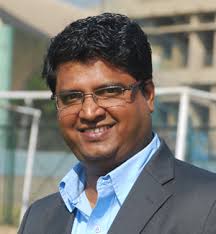
SportzPower’s Dhruv Rupani took the opportunity to interact with SportzConsult co-founder and director JITENDRA JOSHI on the sidelines of the first edition of the competition to find out his vision, the challenges faced to execute the event, its strategies and the road map ahead.
How did the concept of Mumbai Games come about? What was the vision and time frame set for the execution of the concept?

We ideated about the event for the first time at the start of 2016, seeing our experience of developing sport at grassroots levels in schools and colleges.
Gaja Capital’s financial support proved to be the shot in the arm required for us. We initially held a small-scale, pilot event in Navi Mumbai and Thane to test its potential popularity. Gaining a positive response made us bullish to go bigger with our plans in 2018 having the event’s ambassadors, marketing plans, approvals all set by then.
Our promotional campaigns took place between July-November last year.
The vision of the Mumbai Games to create a sporting culture gradually across the country, regardless of results and competition. This is where every amateur has got an opportunity to showcase their hidden talent.
How has the response been so far vis-à-vis SportzConsult’s expectations? Which part of the city has shown greater participation in numbers and enthusiasm?
The response has been exceptional considering that this was just the first season. We were able to attract more than 10000 participants across the city and 16 sports namely badminton, basketball, bowling, football, chess, carrom, judo, gymnastics, tennis, athletics, taekwondo, shooting, skating, squash and table tennis.
It was heartening to see the highest numbers of participation coming in football, badminton and tennis. We are also impressed by equal enthusiasm shown by all the eight ‘contingents’ we have formed based on the biggest areas of the city namely Northern Knights, Western Warriors, Thane ThunderBolts, Flying Falcons, Midtown Mavericks, Navi Mumbai Ninjas, Central Challengers and South Mumbai SeaHawks.
On an estimate, how much did SportzConsult invest in marketing activities surrounding Mumbai Games? What are the marketing tools zeroed down upon which proved to be effective?

We have approximately spent Rs 10 million entirely for marketing and promotional purposes for the event. We opted for a mix of TVCs, digital and outdoor campaigns, with Facebook and WhatsApp proving to be the most effective. Alongside KOOH Sports, our sister organisation, we used posters outside schools they have been associated with over the years to spread awareness to people of all ages, gender and levels of talent and reduce its budget at the same time.
A print campaign was deliberately avoided seeing how a video featuring Pullela Gopichand promoting the event, went viral on social media. Gopichand is one of Mumbai Games’ brand ambassadors and governing council members, giving the initiative a huge push in the first season itself. Through Viren Rasquinha, another big name who has a wealth of experience playing and honing talent in Indian sport, Mumbai Games could affiliate with the Maharashtra Olympic Association.
Roping in former shooter Anjali Bhagwat and former Indian cricket team physiotherapist, John Gloster worked in SportzConsult’s favour too. Gloster designed and conducted the HealthyMindz Fitness Test across venues prior to the event, which enabled participants to determine their fitness levels depending on the sport of participation through metrics such as flexibility, agility, endurance, upper body strength, lower body strength and so on.
Such initiatives also included the Injury Prevention Camp and Sports Parenting, with the latter guiding parents towards making their child love sports for life.
Engaging the participants and their loved ones mattered to us for our marketing activities, which was in line with the vision of creating a sports culture filled with encouragement and joy.
What were the biggest challenges SportzConsult faced to execute an event of such a magnitude for the first time?
The biggest challenge for us to overcome was zeroing in on multi-sport venues across the city. Traditionally, Mumbai has lacked such facilities. Ultimately, 15-16 venues were finalised with two venues allocated to each contingent as their ‘home’ so that there is a sense of belonging and competitiveness at the same time.
Apart from that, we knew that we have our plans well thought and ready to be executed the moment we were able to figure out the format of the tournament of such a scale. We made sure that individual performances will be rewarded the most, yet these will count even more when the contingent benefits from them in the medals tally. When you play for a cause bigger than yourself, it is a greater motivation to do better.
We also realized the value of increasing the USP of our event not just on-the-field, but by organizing events enhancing off-the-field camaraderie where people bonded over sport with fun and frolic.
What were the sources of revenue earning for the Mumbai Games?
For revenue, we relied on participants’ registration fees as well as the fees paid by the owners of all eight contingents to possess ownership rights. Although there weren’t any sponsors this season but in the future, we are positive about their interest increasing since we have already signed partnership deals with big brands such as Golds Gym, Bisleri, Scrabble and Auric.
Courtesy Golds Gym being one of our long term clients, they promoted the event across all its branches in the city which resulted in many of its members adding to participation numbers and gaining discounts.
There are talks are also going on at present with angel investors to fund the initiative’s expansion.
Speaking of expansion, will the concept be taken beyond Mumbai?
Yes, the concept will be taken to other top metro cities such as Pune, Bengaluru, Hyderabad and New Delhi this year itself. The 2019 Lok Sabha elections could potentially delay the expansion by 2-3 months, but the break will be used to mull about bagging more sponsors.
In 2020, we will focus more on venturing with the tournament into Tier II and III cities with KOOH Sports.
We are confident that the platform will become most sought after for helping amateurs become professionals in sport as an additional outcome besides creating a sporting culture within the next five years. It won’t be long before Mumbai Games become the biggest talent hunt not just in the city, but across the country.

